Internet Blackout: Cloudflare’s Massive Outage Took Down ChatGPT, Twitter (X), and Half the Web (0)

When a provider like Cloudflare sneezes, the modern internet catches a cold. It’s a sobering reminder of just how fragile our hyper-connected digital lives truly are.
The Day the Internet Froze: What Actually Happened with Cloudflare
Did you try to tweet, jump into a competitive match of League of Legends, or ask ChatGPT a burning question recently, only to be met with a frustrating, blank screen or an error message that just wouldn’t quit? Trust me, you weren’t alone. It felt like the digital rug had been pulled out from under us all.
For a significant chunk of the day, users across the globe from the casual scroller on X (formerly Twitter) to the professional designer relying on Canva faced widespread service disruptions. And the culprit? None other than Cloudflare, the massive content delivery network (CDN) that quietly powers a substantial slice of the modern internet.
This wasn’t just a minor glitch. We’re talking about a multi-platform digital blackout that started hitting hard around 6:00 AM ET (4.30 pm IST), according to tracking sites like Downdetector. Initially, the drama seemed to stem from an issue with Cloudflare’s support portal provider, but like a small leak leading to a flood, it rapidly escalated into an enormous service degradation that impacted nearly every facet of the online experience.
If you’re wondering why this one company’s hiccup can cause such global chaos, it’s because of their pivotal role. Cloudflare is essentially the digital backbone, sitting between you and the websites you visit, managing everything from content delivery to security challenges. When that central system goes offline, all the sites depending on it even if they are perfectly operational underneath suddenly become unreachable. What a nightmare, right?
Why Was I Seeing a Mysterious “Unblock” Message?
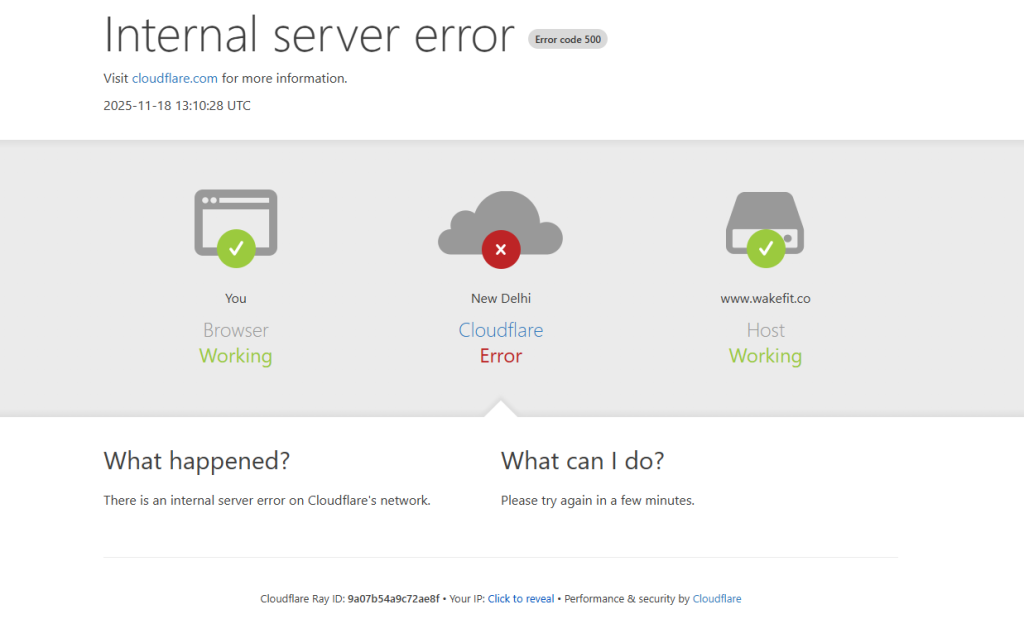
One of the more bizarre user experiences during this event was running into a cryptic message that looked something like: “Please unblock challenges.cloudflare.com to proceed.”
If you saw this, you might have initially thought your own computer or network was to blame. But here’s the inside scoop: this message was a tell-tale sign of the outage itself! It pops up because Cloudflare’s security and challenge systems, designed to protect the site from bots and attacks, were fundamentally malfunctioning.
Think of it this way: Cloudflare is the bouncer at the club door. When the bouncer gets sick, the doors get jammed. The club (the actual website) is fine, the music’s still playing, but nobody can get past the entrance. This generic blockage prevented legitimate users from accessing everything from creative tools like Canva to advanced AI services like ChatGPT and Claude.
What Did Cloudflare Say About the Server Outage?
The company wasn’t silent, thankfully, though their initial statement hinted at the sheer scale of the problem.
On their official status page, they first posted a very brief, slightly alarming message acknowledging the situation:
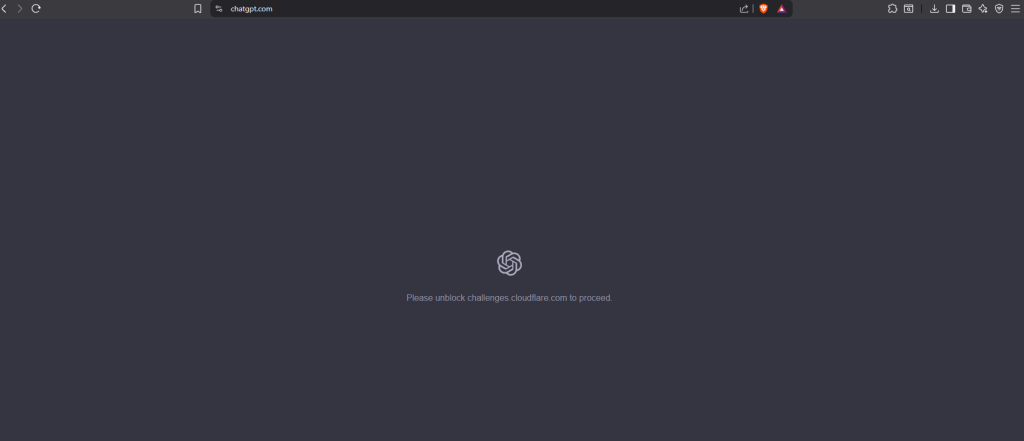
“Cloudflare is aware of, and investigating an issue which impacts multiple customers: Widespread 500 errors, Cloudflare Dashboard and API also failing. We are working to understand the full impact and mitigate this problem. More updates to follow shortly.”
Notice the keywords: “Widespread 500 errors” and their own “Dashboard and API also failing.” When the system built to manage the internet starts failing to manage itself, you know it’s a rough day at the office!
As their team scrambled to fix things, a more optimistic update followed: “We are seeing services recover, but customers may continue to observe higher-than-normal error rates as we continue remediation efforts. We are continuing to investigate this issue.” It sounds like they were patching things up on the fly, trying to restore functionality while the cleanup was still underway.
The Domino Effect: A Huge Cloudflare Outage List
The sheer volume of services that rely on Cloudflare for essentials like DNS resolution, CDN (Content Delivery Network), and DDoS protection means an outage like this creates a disastrous cascading effect. This incident wasn’t an isolated website going down; it was a fundamental instability affecting the delivery of content for a vast number of businesses.
This time around, the outage echoed the scale of other major disruptions—like a recent AWS outage—proving that the internet is only as strong as its weakest link, or in this case, its most central one.
Here’s a snapshot of some of the most visible names that went dark due to the Cloudflare service degradation:
- X (Twitter)
- OpenAI (The engine behind Chat GPT!)
- Spotify
- Canva
- Shopify
- Garmin
- Claude
- Discord
- League of Legends
- Major telecommunication services like Verizon, T-Mobile, and AT&T
It’s a stark list. The fact that your favorite micro-blogging site, the hottest AI chatbot, and your Sunday gaming session were all simultaneously impacted really drives home the critical dependency on these latent semantic indexing (LSI) keywords central infrastructure providers.
The Takeaway: Is the Internet Too Centralized?
When we look at this massive Cloudflare outage, which successfully took down giants like Twitter (X) and ChatGPT, it begs a critical question: is our digital world becoming too centralized? We rely on a handful of massive tech providers AWS, Azure, Google Cloud, and CDNs like Cloudflare to keep everything running smoothly. When one of these critical services faces a problem, it’s not just one platform that suffers; it’s practically everyone.
As users, we’re left waiting for the fix, reminded that the high-speed, always-on internet we take for granted is, at its core, a complex and surprisingly fragile system. The silver lining is that these events force us to think about resilience and redundancy—topics that tech companies are scrambling to address right now.
The biggest lesson? We need to prepare for digital interruptions. Whether you run a small e-commerce shop on Shopify or rely on OpenAI for your work, understanding your infrastructure dependencies is no longer optional.
So, the next time your screen goes blank and you see that dreaded Cloudflare message, take a deep breath. You’re not alone, and it’s a global reminder of the delicate balance of the content delivery network we all depend on.
- Valve Delays Steam Machine Pricing as RAM Crisis Throws PC Market Into Chaos
- LG OLED evo W6 Wallpaper TV Hands-On at CES 2026: Ultra-Thin, Wireless, and Surprisingly Affordable
- ASUS Introduces Next-Generation Ultra-Small-Form-Factor PCs at CES 2026
- ASUS Unveils New AI PC Lineup at CES 2026, Led by Dual-Screen Zenbook DUO and ProArt GoPro Edition
- ASUS Unveils ExpertBook P3 G2 for Modern Business Professionals
About The Author